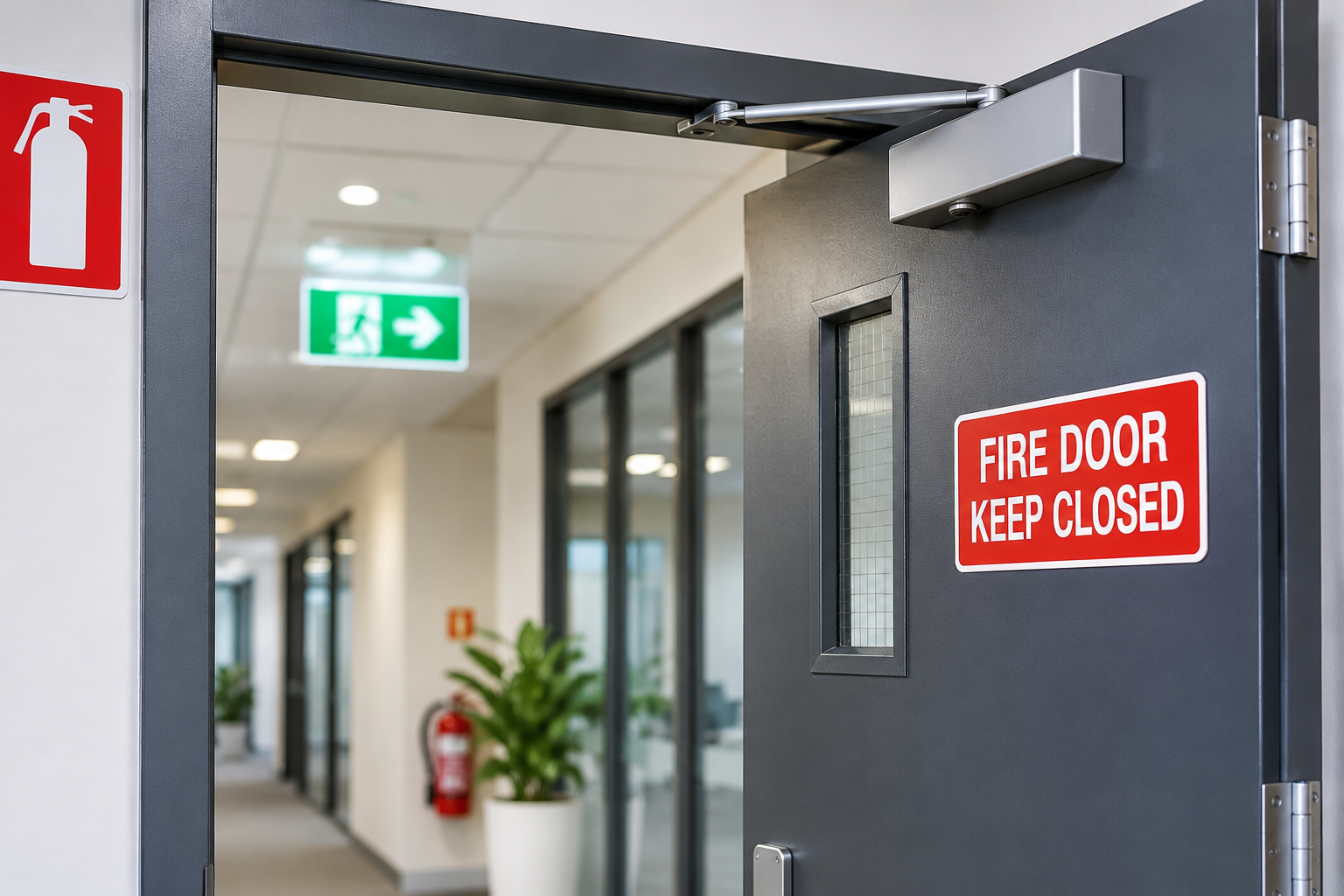
Fire doors are an essential part of building fire protection, helping to limit the spread of fire and smoke while supporting safer evacuation. However, everyday wear, unauthorised modifications and poor maintenance can affect their ability to perform correctly. For Sydney commercial property owners, strata managers and facilities managers, understanding the common causes of fire door defects can help reduce compliance issues and maintain safer buildings.
Why Are Fire Doors So Important?
Fire doors form part of a building’s passive fire protection system. Unlike active systems such as fire alarms and sprinklers, passive fire protection is designed to resist the spread of fire through the building’s construction.
When correctly installed and maintained, fire doors help protect fire-rated openings, separate building compartments and support safe evacuation.
A fire door that fails to close, has damaged components or has been incorrectly modified may compromise the protection it was designed to provide.
Seven Common Reasons Fire Doors Fail Inspections
1. Fire doors that do not close properly
Fire doors are generally required to close and latch correctly to maintain their intended fire protection performance.
Problems with door closers, hinges, alignment or latching mechanisms can prevent a door from closing securely.
2. Damaged or missing seals
Where required by the doorset design, smoke seals and intumescent seals help limit smoke movement or expand under heat to protect gaps around the door.
Damaged, missing or incorrectly fitted seals can affect the doorset’s performance.
3. Excessive gaps around doors
Fire doors are designed and tested as complete assemblies, with specific requirements for clearances between the door leaf, frame and floor.
Excessive gaps caused by wear, movement or incorrect installation can compromise compliance.
4. Unauthorised modifications
Installing additional locks, changing door hardware, cutting openings or making other modifications without appropriate approval can affect a fire door’s certification and performance.
Even seemingly minor alterations should be assessed before work proceeds.
5. Doors being wedged open
A fire door held open with a wedge, furniture or other object may be unable to perform its intended function during a fire.
Where doors need to remain open for operational reasons, an appropriately designed and approved automatic release system may be necessary.
6. Damaged hinges and hardware
Loose hinges, damaged door closers, defective latches and unsuitable replacement hardware can affect the operation of a fire door.
Replacement components must be appropriate for the relevant fire-rated doorset.
7. Physical damage and deterioration
Impact damage, corrosion, damaged frames and general deterioration can affect a fire door’s structural integrity.
These issues are particularly common in high-traffic environments where doors experience frequent use.
Fire Door Compliance Requirements in NSW
Fire doors may be identified as essential fire safety measures within a building’s Fire Safety Schedule.
Relevant requirements can include AS 1905.1 for fire-resistant doorsets and AS 1851 for routine servicing of applicable fire protection measures.
Since 13 February 2026, NSW building owners have been required to maintain applicable essential fire safety measures in accordance with AS 1851-2012, where the standard addresses the relevant maintenance activity and an approved performance solution does not specify otherwise. *NSW Government
How Often Should Fire Doors Be Inspected?
The appropriate inspection and maintenance frequency depends on the type of fire door, its application, the applicable servicing standard and the building’s requirements.
Different arrangements may apply to hinged, sliding and apartment-entry fire doors.
Building owners should ensure their fire doors are included in an appropriate inspection and maintenance program and that any identified defects are addressed promptly.
Routine inspections also provide an opportunity to identify deterioration before it develops into a more significant problem.
Who Is Responsible for Fire Door Maintenance?
In NSW, building owners are responsible for ensuring that essential fire safety measures are appropriately maintained.
For strata properties, this responsibility commonly involves the owners corporation, although the allocation of responsibilities for individual doors may depend on the building’s circumstances and applicable strata arrangements.
Commercial landlords and building managers should also establish clear processes for reporting defects, arranging inspections and maintaining service records.
NSW building owners must retain required AS 1851 maintenance records on site for at least seven years. *NSW Government
Can a Defective Fire Door Be Repaired?
Not every fire door defect requires a complete replacement.
Some issues may be resolved through appropriate adjustment, servicing or replacement of compatible components. However, repairs must preserve the required performance of the fire-rated doorset.
Where a door has been significantly damaged, incorrectly modified or cannot be restored to its required standard, replacement may be necessary.
Assessment by a suitably qualified professional is important before deciding on remedial work.
Maintaining Fire Safety Compliance Across Sydney
Regular maintenance of fire protection systems is an important responsibility for commercial and strata building owners.
FCF Fire & Electrical Sydney supports businesses, strata properties and commercial facilities with fire protection equipment inspections, testing and maintenance services.
Maintaining a coordinated fire safety servicing program helps building managers identify defects, maintain documentation and prepare for annual fire safety assessments.
Need assistance with fire safety compliance in your Sydney building? Contact Fire Services Sydney to discuss your fire protection inspection and maintenance requirements.