If you’re looking for fire safety inspections Sydney businesses can rely on, it’s helpful to understand what an inspection involves and why regular inspection and maintenance of fire protection equipment matters.
Whether you manage a commercial property, office, warehouse, retail store, strata property or other workplace, fire safety inspections are an important part of maintaining the building’s fire protection systems and equipment.
But what actually happens during an inspection?
For many business owners and managers, fire equipment is something they walk past every day without giving it much thought. Fire extinguishers sit on walls, emergency lights remain overhead and exit signs quietly point towards the nearest escape route.
A professional fire safety inspection helps ensure this equipment continues to be maintained and ready when needed.
What Is Checked During a Fire Safety Inspection?
The equipment inspected will depend on the building and the fire protection systems installed.
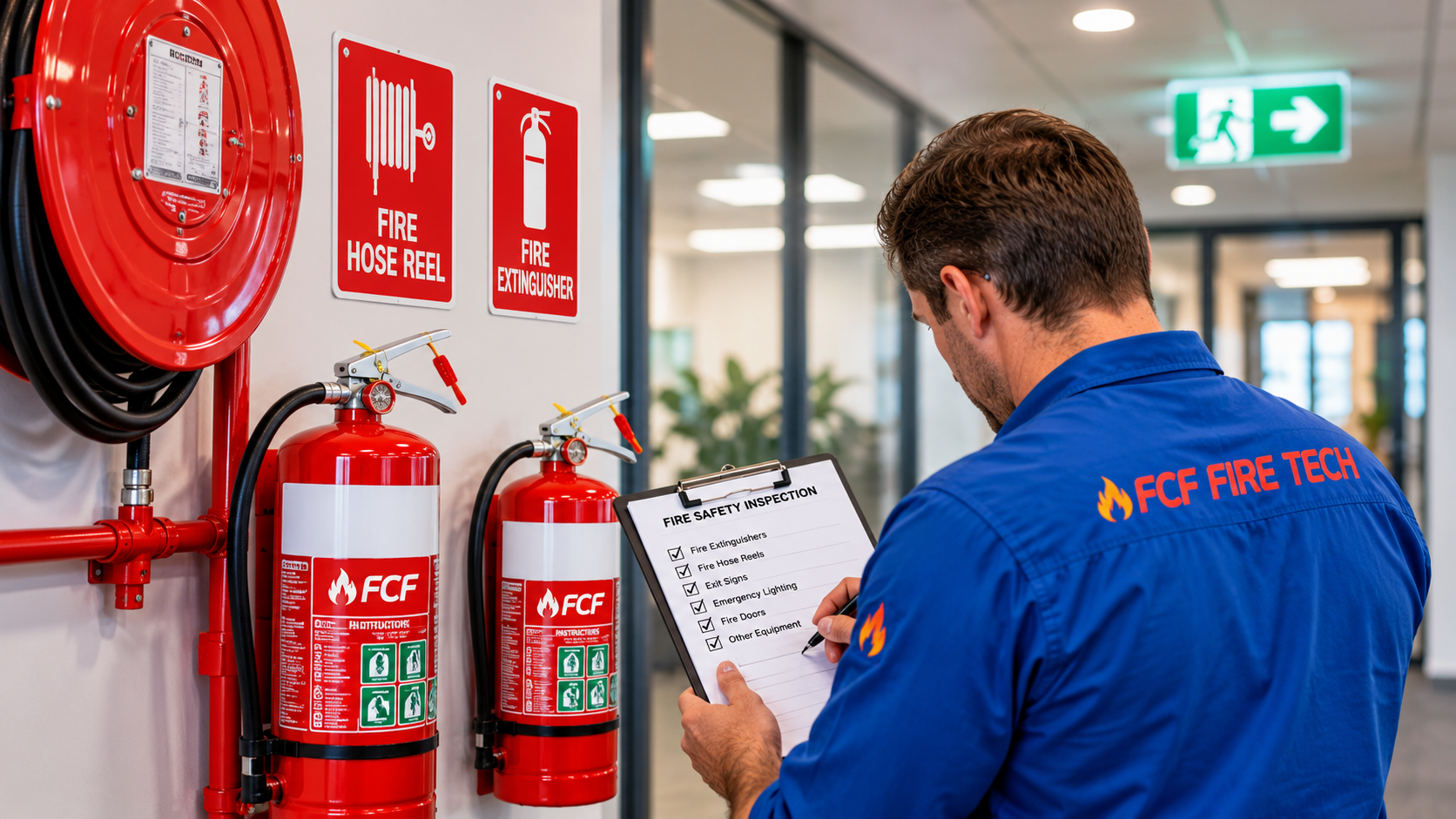
Depending on the premises, an inspection may involve equipment such as:
- Portable fire extinguishers
- Fire blankets
- Fire hose reels
- Exit signs
- Emergency lighting
- Fire doors
- Other installed fire protection equipment and systems
Different equipment has different inspection, testing and maintenance requirements, so the work required will depend on the individual property.
Fire Extinguishers
Fire extinguishers are one of the most recognisable pieces of workplace fire equipment.
During servicing, technicians can check the condition of the equipment and identify visible damage or other issues requiring attention.
The surrounding area is also important.
An extinguisher may be in good condition but still present a problem if it has become obstructed by stock, furniture or workplace equipment.
Its location and accessibility should therefore remain part of the overall fire safety picture.
Fire Hose Reels
Where fire hose reels are installed, they also require ongoing inspection and maintenance.
A technician can assess the equipment in accordance with the applicable requirements and identify issues requiring maintenance or further attention.
Access to the hose reel should also remain clear.
This is particularly worth watching in warehouses, storage facilities and commercial properties where stock or equipment regularly moves around.
Exit Signs and Emergency Lighting
If normal lighting fails during an emergency, people still need to be able to identify exits and safely make their way out of the building.
That’s where exit signs and emergency lighting become particularly important.
Testing helps identify lights, signs, batteries or components that may no longer be operating as intended.
Problems aren’t always obvious during normal business hours, which is one reason routine testing is so important.
Fire Doors
Fire doors form part of a building’s passive fire protection.
They are designed to perform an important function during a fire, but everyday workplace behaviour can compromise them.
Doors may be propped open, damaged or obstructed. Furniture and stored items can also interfere with access.
Where fire doors form part of the building’s fire safety measures, their condition and operation should not be overlooked.
Changes Around the Workplace Can Create New Problems
A fire safety inspection isn’t only about looking at individual pieces of equipment.
Changes to the workplace itself can also matter.
Businesses regularly move furniture, install shelving, add machinery, change storage areas and reconfigure workspaces.
Over time, these changes can affect access to fire equipment or emergency exits.
For example, new warehouse racking might obstruct equipment that was previously easy to access. A changed office layout could affect an evacuation route. New machinery could introduce different risks into a workshop.
This is why fire safety shouldn’t be treated as something that is reviewed once and then forgotten.
What Happens If a Problem Is Found?
The purpose of an inspection is to identify issues so they can be addressed.
Some problems may be relatively straightforward, while others may require repair, replacement or further investigation.
Keeping accurate servicing and maintenance records also helps businesses and property managers stay on top of ongoing fire protection requirements.
Rather than waiting until equipment fails or an issue becomes urgent, regular inspections provide an opportunity to identify problems earlier.
Preparing for a Fire Safety Inspection
Businesses can help make the process easier by ensuring technicians can access relevant areas and equipment.
Before an inspection, it’s worth checking that fire extinguishers, hose reels, fire doors, electrical areas and other relevant equipment aren’t blocked by stock, furniture or stored items.
If the premises have undergone renovations, a change of use or a significant layout change, let your fire service provider know.
It may be relevant when reviewing the fire protection requirements of the property.
Fire Safety Inspections Sydney: Why Regular Checks Matter
Fire protection equipment is installed for situations everyone hopes will never happen.
But if an emergency does occur, that’s exactly when you need the equipment and systems around your workplace to perform as intended.
Regular inspection, testing and maintenance help ensure fire protection measures aren’t simply present – they’re being properly looked after.
FCF Fire & Electrical Sydney provides fire protection inspection, testing and maintenance services for commercial properties and businesses across Sydney.
Whether you manage an office, warehouse, retail property, strata complex or other commercial facility, keeping fire safety equipment professionally maintained can help you stay on top of your responsibilities and keep your workplace prepared.