Fire safety compliance is an essential consideration when renovating a commercial property, completing an office fit-out or changing how a building is used. For Sydney property owners, business operators and building managers, understanding fire safety requirements before work begins can help prevent compliance issues, unexpected costs and delays in occupying the premises. Whether you’re converting an office into a medical practice, upgrading a retail tenancy or refurbishing an industrial facility, fire safety compliance should be a priority from the outset of the planning process.
Why Can Renovations Affect Fire Safety Compliance?
A building’s existing fire protection systems are designed around factors such as its approved use, layout, occupancy and fire safety requirements.
When these factors change, the existing fire safety measures may need to be reviewed to determine whether they remain suitable.
For example, installing new internal walls could affect smoke detection coverage, while changing the use of a warehouse may introduce different fire hazards or evacuation requirements.
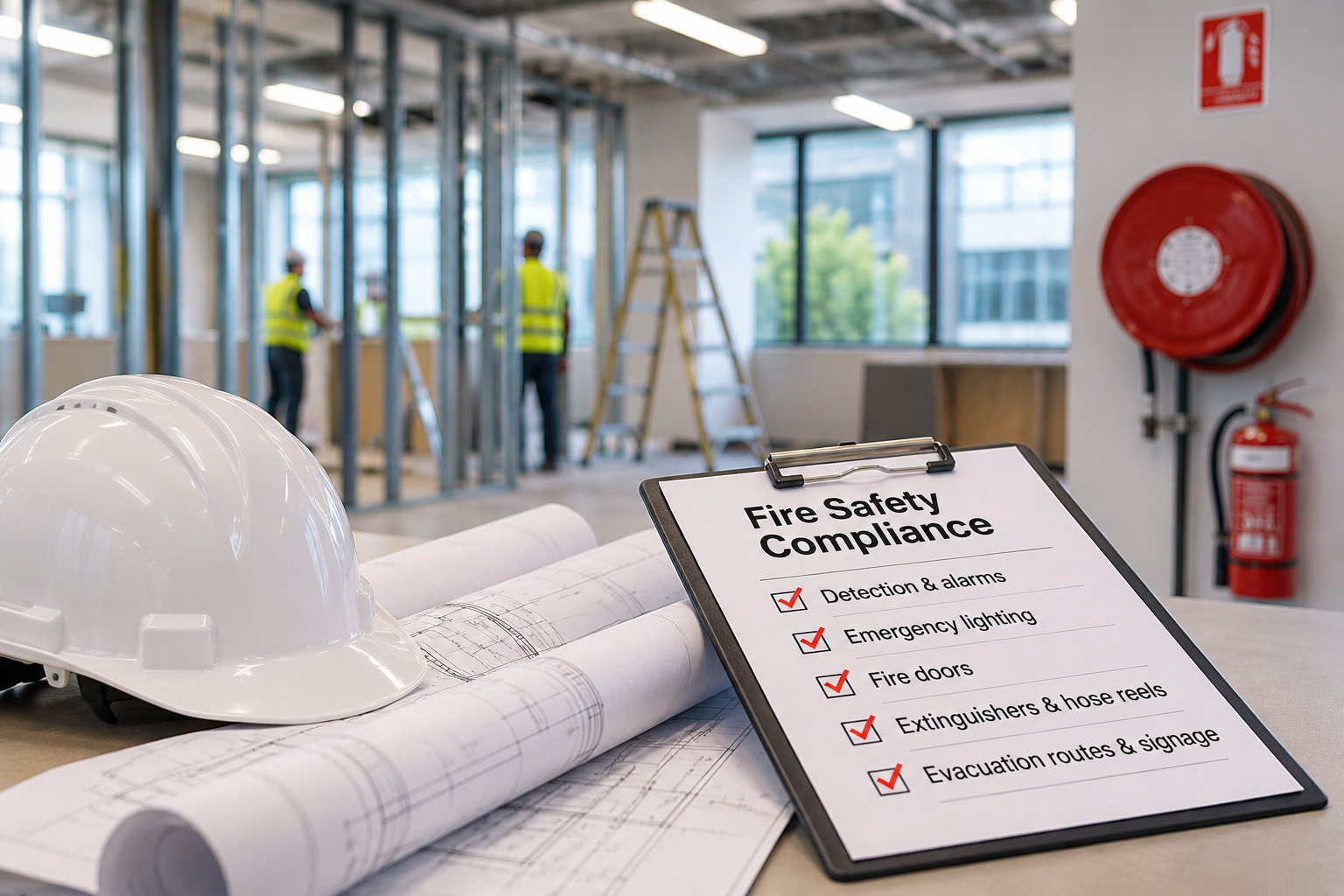
Depending on the nature of the project, fire safety considerations may include:
- Fire detection and alarm systems
- Fire extinguishers and hose reels
- Fire hydrant and sprinkler systems
- Emergency and exit lighting
- Fire doors and fire-resistant construction
- Emergency evacuation routes and signage
- Fire safety documentation and certification
Identifying potential issues during the planning stage is generally more efficient than discovering them after renovations are complete.
Understanding Fire Safety Schedules in NSW
A Fire Safety Schedule (FSS) identifies the essential and critical fire safety measures applicable to a building and the minimum performance standards they must achieve.
In NSW, a new Fire Safety Schedule may be required when certain building approvals are issued, including construction certificates, complying development certificates and approvals for changes in building use.
Importantly, a Fire Safety Schedule addresses the building as a whole, not simply the area being renovated. This means alterations to one tenancy can have implications for broader building fire safety requirements. *NSW Government
Common Fire Safety Issues During Commercial Fit-Outs
1. Changes to emergency exits
New partitions, storage areas or altered floor layouts can affect access to emergency exits. Exit pathways must remain suitable for safe evacuation.
2. Fire detection coverage
Changes to ceilings, walls and room configurations may affect the positioning and effectiveness of smoke detectors and other fire detection equipment.
3. Fire extinguisher locations
New equipment, furniture or internal layouts can make existing fire extinguishers difficult to access or unsuitable for the hazards present.
4. Fire doors and penetrations
Electrical, plumbing and air conditioning installations can affect fire-rated walls and other fire-resistant construction. Penetrations must be appropriately protected to maintain the required fire resistance.
5. Emergency lighting and exit signs
Changes to internal layouts may require existing emergency lighting and exit signage to be reviewed to ensure evacuation routes remain adequately identified and illuminated.
What Happens to the Annual Fire Safety Statement?
Commercial building owners in NSW may be required to submit an Annual Fire Safety Statement (AFSS) confirming that applicable essential fire safety measures have been assessed and are capable of performing to their required standards.
Where renovations introduce new or altered essential fire safety measures, a Fire Safety Certificate may also be required before the affected premises are occupied.
Building owners should ensure that their Fire Safety Schedule and associated documentation accurately reflect the approved fire safety measures within the property.
Planning Fire Safety Before Renovations Begin
Before starting a commercial renovation or change-of-use project, property owners should review their existing Fire Safety Schedule and discuss proposed alterations with the relevant building certifier and qualified fire safety professionals.
An early review can help identify equipment that may need relocating, additional protection that may be required and potential issues affecting ongoing compliance.
It is also important to establish who is responsible for fire safety works, particularly in multi-tenanted commercial properties where responsibilities may be shared between landlords, tenants and building managers.
Commercial Fire Safety Services Across Sydney
FCF Fire & Electrical Sydney provides professional fire protection services to commercial, industrial and strata properties throughout Sydney.
From fire safety equipment inspections and maintenance to identifying potential compliance concerns, our team helps building owners and managers maintain safe, functional fire protection systems.
Planning a commercial renovation or property fit-out? Contact FCF Fire & Electrical Sydney to discuss your fire safety equipment and maintenance requirements before work begins.