
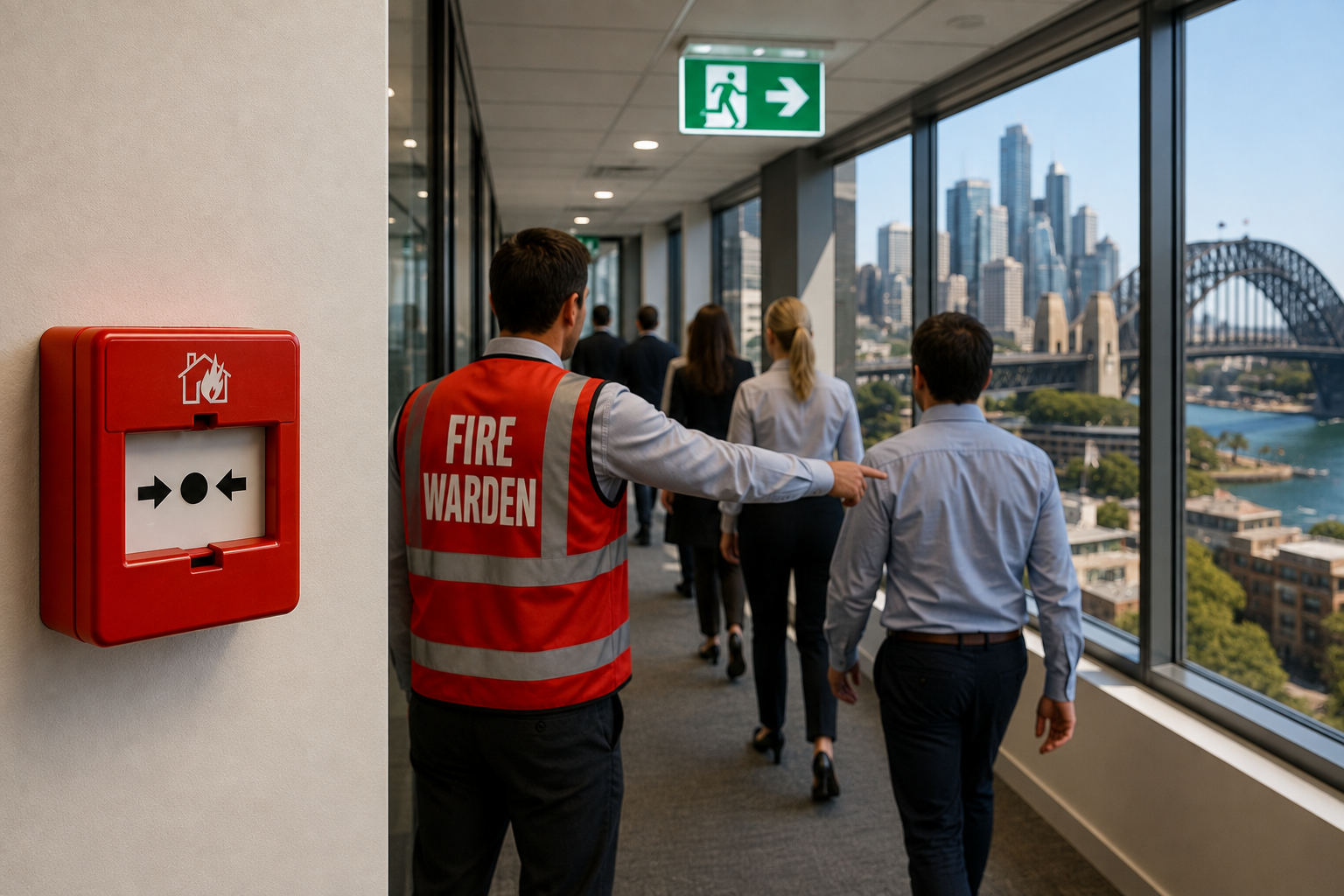
When a fire alarm sounds in a workplace, everything can change in seconds.
One moment, staff are answering phones, serving customers, attending meetings or working on the factory floor. The next, an alarm is sounding and everyone needs to know exactly what to do.
This is where good workplace fire safety Sydney businesses have prepared for becomes so important.
In an emergency, confusion wastes valuable time. Staff need to recognise the alarm, follow the site’s emergency procedures and evacuate when required. Wardens need to understand their responsibilities, and everyone needs to know where to go once they leave the building.
While every workplace and emergency is different, let’s look at what those critical first few minutes could involve.
Minute 1: The Alarm Sounds – What Happens First?
A fire alarm should never be casually dismissed.
Even workplaces that experience occasional false alarms need employees to understand that every activation should be responded to according to the site’s established emergency procedures.
Depending on the building and emergency plan, an alarm could be triggered by smoke or heat detection equipment, a manual call point or another part of the fire detection and alarm system.
Employees should know what the different alarms used at their workplace mean and what action they are expected to take.
This is one of the reasons regular training is such an important part of workplace fire safety Sydney businesses shouldn’t overlook.
You don’t want employees trying to remember procedures for the first time while an alarm is sounding.
Minute 2: Wardens Put Their Training Into Action
Fire and emergency wardens can play an important role in a workplace evacuation.
Their responsibilities will depend on the workplace’s emergency plan and procedures, but may include helping direct occupants, checking designated areas where safe to do so, communicating information and helping people move towards appropriate exits and assembly areas.
Wardens shouldn’t be expected to improvise their response.
Training gives them a better understanding of their responsibilities before an emergency happens.
It also helps the wider workforce recognise who may be providing directions during an evacuation.
Minute 3: Evacuating the Workplace
When evacuation is required, people should follow the site’s emergency procedures and directions.
That sounds simple.
In reality, human behaviour can make evacuations surprisingly complicated.
Someone may want to retrieve their handbag.
Another employee might decide to finish what they’re doing first.
A visitor may have no idea where the exit is.
A contractor might not know where the assembly area is located.
Someone may automatically head towards the same door they use every morning rather than the appropriate evacuation route.
Good emergency planning considers these possibilities before the alarm ever sounds.
Clear exit signage, evacuation diagrams, staff training and properly developed procedures all help occupants understand where they should go.
What About Customers, Visitors and Contractors?
This is something businesses can easily overlook.
Your employees may have participated in evacuation training.
The customer who walked through the door five minutes ago hasn’t.
Neither has the delivery driver, contractor or salesperson attending a meeting for the first time.
Workplace emergency procedures should consider everyone who may reasonably be present, not simply permanent employees.
Staff and wardens need to understand how visitors and other occupants are managed during an emergency.
Minute 4: Reaching the Assembly Area
Getting outside isn’t necessarily the end of an evacuation.
Occupants generally need to proceed to the designated assembly area specified in the workplace’s emergency arrangements.
This allows the organisation to follow its procedures for accounting for people and identifying whether anyone may be missing.
People shouldn’t wander away simply because they’ve left the building.
They should also avoid obstructing access required by emergency services.
An assembly area only works effectively when employees know where it is before an emergency occurs.
Minute 5: Accounting for People
Imagine having 50 employees, several visitors and three contractors on site when an evacuation occurs.
Can you determine whether everyone has safely evacuated?
Depending on the workplace, systems for accounting for people might involve staff lists, visitor registers, electronic systems, roll calls or other procedures.
The appropriate method will vary between organisations.
The important thing is having a process rather than trying to invent one during an emergency.
Would Your Team Know What to Do Today?
Here’s a simple question for every business owner and manager:
If the alarm sounded right now, would everyone know what to do?
Would your newest employee know where to go?
Would reception know how visitors are managed?
Do your wardens understand their roles?
Do employees know the assembly area?
Are your evacuation diagrams current?
Do people understand the alarms used in the building?
If you’re uncertain about several of those answers, your workplace emergency preparedness may deserve another look.
Why Evacuation Drills Matter
You can write excellent procedures and display evacuation diagrams throughout a workplace.
But until people practise responding, you don’t necessarily know how well everything will work.
Evacuation exercises can identify practical issues that aren’t obvious on paper.
Perhaps employees aren’t sure which exit to use.
Maybe visitors aren’t being accounted for properly.
Perhaps an assembly area creates confusion.
Or employees simply haven’t understood the procedures as well as management assumed.
Finding these issues during an exercise gives the business an opportunity to address them before a genuine emergency.
Workplace Fire Safety Sydney Businesses Need Is About Preparation
Fire safety isn’t only about installing extinguishers and exit signs.
Equipment is obviously important, but people also need to know how to respond.
Effective workplace fire safety Sydney businesses rely on can involve appropriate fire equipment, servicing and maintenance, emergency planning, evacuation diagrams, trained wardens and staff who understand their responsibilities.
Each element supports the others.
An evacuation diagram isn’t particularly useful if nobody looks at it until an emergency.
A fire extinguisher isn’t much help if it hasn’t been appropriately maintained.
And an emergency plan can’t achieve much if nobody knows what it says.
How FCF Fire & Electrical Sydney Can Help
FCF Fire & Electrical Sydney assists businesses with a range of fire protection and emergency preparedness services.
Depending on your workplace requirements, this can include fire equipment inspection and servicing, evacuation diagrams, fire safety training, fire warden training and other fire protection services.
The aim is simple: help your workplace be better prepared before an emergency occurs.
Because when an alarm sounds, that isn’t the time to start working out what everyone should do.
Frequently Asked Questions
What should employees do when a workplace fire alarm sounds?
Employees should follow their workplace’s established emergency procedures and instructions provided by appropriately appointed personnel or emergency services.
Why are fire drills important?
Evacuation exercises allow businesses to practise emergency procedures and can help identify confusion, training gaps or practical problems before a real emergency occurs.
Should visitors be included in workplace evacuation procedures?
Yes. Emergency planning should consider visitors, contractors, customers and other people who may be present at the workplace.
What does a fire warden do?
Responsibilities vary depending on the workplace and emergency procedures. Wardens may assist with coordinating evacuation, directing occupants and performing other duties specified by the site’s emergency plan.
How often should workplace fire procedures be reviewed?
Procedures should remain appropriate to the workplace and should be reviewed when relevant changes occur or where reviews, exercises or other circumstances identify a need for updates.