Businesses rarely stay exactly the same.
A company grows. New employees arrive. Walls are added. A warehouse takes on more stock. Machinery is installed. Offices are renovated. Departments move and rooms begin being used for completely different purposes.
The workplace changes gradually.
But sometimes the fire safety arrangements don’t change with it.
A fire safety plan Sydney workplace has relied on for years may no longer accurately reflect the way the premises operate today.
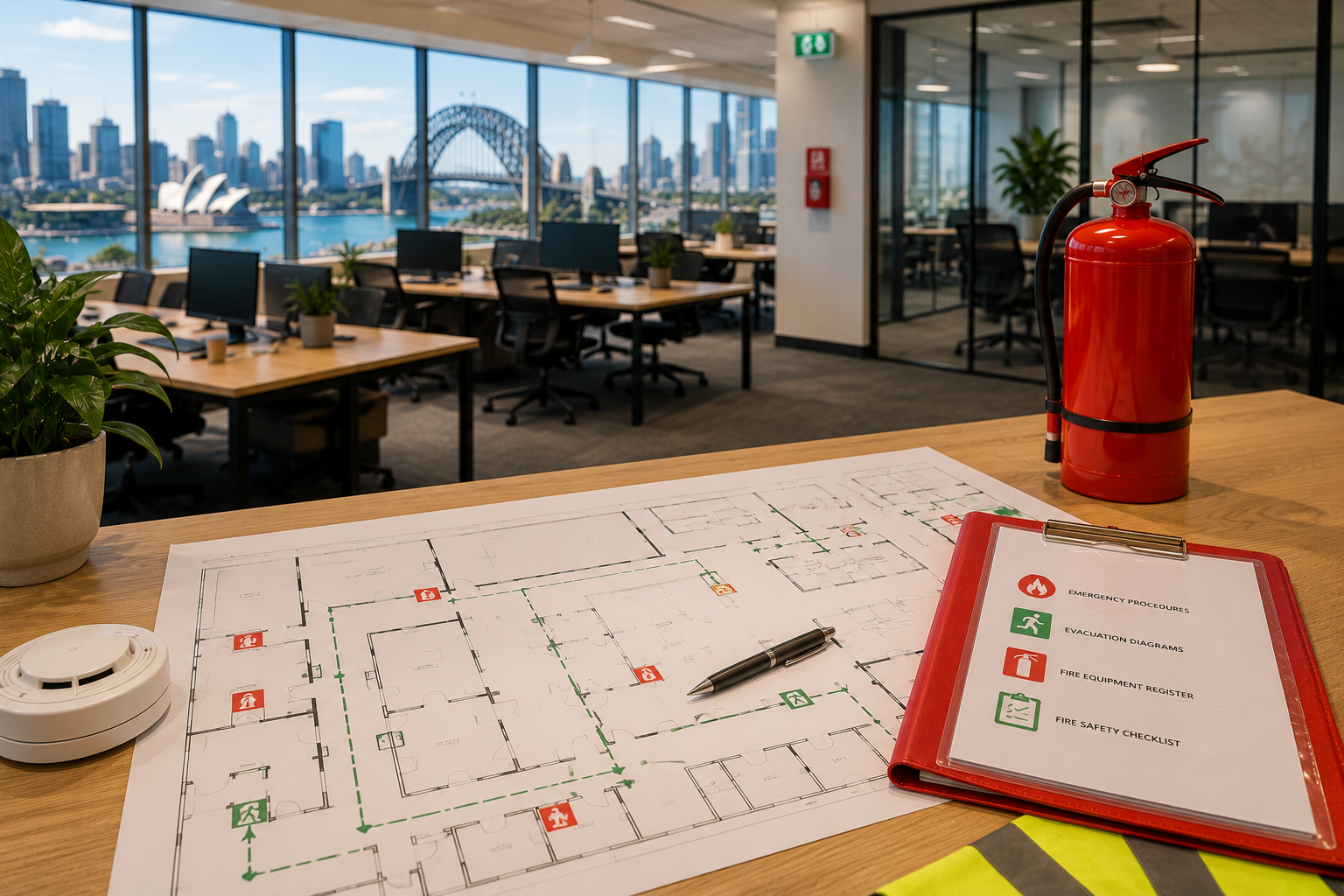
Evacuation diagrams, emergency procedures and other fire safety arrangements need to remain relevant to the actual workplace.
Here are seven signs it may be time to review yours.
1. You’ve Renovated or Changed the Layout
Renovations are an obvious reason to reassess fire safety arrangements.
Perhaps you’ve added new offices, installed partitions, relocated doors or converted an open area into several smaller rooms.
Even relatively modest alterations can affect how people move through a building.
If your workplace layout has changed but the evacuation diagram on the wall still shows the old configuration, that’s an obvious warning sign.
The information employees and visitors rely upon during an emergency should reflect the current workplace.
2. Your Workforce Has Grown
Perhaps your Sydney business started with eight employees and now has 30.
Growth is great for business, but additional people can change emergency planning requirements.
More employees can mean more people evacuating, different working areas, additional visitors and potentially changes to warden arrangements or procedures.
It can also mean many employees weren’t working for the company when the original procedures were introduced.
A growing workforce is a good opportunity to review fire safety plan Sydney arrangements and ensure current staff understand what is expected of them.
3. You’ve Installed New Equipment or Machinery
Businesses evolve, and so does the equipment they use.
New machinery, electrical equipment, commercial cooking appliances, battery systems or other equipment may alter the risks within a workplace.
Changes shouldn’t simply be considered from an operational perspective.
They may also warrant reviewing relevant fire risks, equipment and emergency arrangements.
This is particularly important where new processes introduce heat, electrical loads, combustible materials or other hazards.
4. Your Exits or Evacuation Routes Have Changed
Walk through your workplace and compare what you see with your evacuation diagram.
Do the exits shown on the diagram still correspond with the building?
Are routes still appropriate?
Has anything changed around doorways or corridors?
Has equipment or furniture altered how areas are accessed?
Evacuation information needs to correspond with the physical workplace.
A beautifully printed diagram isn’t useful if it describes a layout that no longer exists.
5. You’re Storing More – Or Storing Different Materials
Storage areas have a habit of growing.
A small storeroom becomes packed with cardboard cartons.
Additional stock starts occupying areas that weren’t originally intended for storage.
A business begins using new chemicals, packaging materials or other products.
These changes may alter the fire risks within a workplace.
They can also create problems if storage interferes with access to fire equipment or affects evacuation paths.
When the way your business stores materials changes substantially, it’s worth considering whether your fire safety arrangements need to change too.
6. New Tenants Have Moved In or Your Building Is Used Differently
Many Sydney businesses operate in multi-tenanted buildings.
Over time, tenants change.
A quiet professional office might be replaced by a business with more employees, different equipment or greater numbers of visitors.
Businesses might also expand into neighbouring areas or begin sharing facilities.
Changes to how a building is occupied can affect emergency arrangements and responsibilities.
This is another reason a fire safety plan Sydney business relies upon shouldn’t simply be filed away and forgotten.
7. Your Evacuation Diagram Looks Like It Belongs in Another Era
Sometimes you don’t need a complicated assessment to recognise there’s a problem.
Look at the evacuation diagram displayed in your workplace.
Does it show rooms that no longer exist?
Does it omit newer areas?
Is fire equipment shown in the wrong location?
Has the diagram become damaged, faded or difficult to read?
Does anyone know when it was last reviewed?
An outdated evacuation diagram is an obvious prompt to investigate whether other parts of your emergency arrangements also need reviewing.
Try the Evacuation Diagram Walk-Around Test
Here’s a useful exercise.
Take one of your workplace evacuation diagrams off the wall – or photograph it – and physically walk through the premises.
Compare the diagram with what you see.
Check whether the layout corresponds with reality.
Look at the exits.
Look at the location of fire equipment.
Look at the paths people would use to leave.
Look at the assembly information.
You may be surprised how much a workplace has changed since the diagram was created.
Don’t Forget About Your Fire Equipment
Changes to a workplace can also affect fire protection equipment.
Extinguishers, fire blankets, hose reels, alarms, exit signs and emergency lighting need to remain appropriate and accessible according to the applicable requirements for the premises.
If an office has been renovated around an extinguisher or equipment has effectively disappeared behind storage, that’s something that should be addressed.
Regular inspection and servicing also help identify equipment-related issues.
Your Staff Have Changed Too
Buildings aren’t the only things that change.
People do.
Wardens leave.
New employees arrive.
Managers change.
Businesses restructure.
A person who knew the emergency procedures extremely well five years ago may no longer work there.
Ask your current employees where the assembly area is.
Ask who the wardens are.
Ask what they would do if the evacuation alarm sounded.
Their answers can tell you quite a lot about whether training needs refreshing.
Fire Safety Plan Sydney Businesses Should Treat as a Living System
A fire safety plan Sydney workplace uses shouldn’t be viewed as a document that is completed once and forgotten.
Fire safety needs to reflect the workplace as it actually exists.
As businesses grow, renovate, introduce new equipment and change the way their premises are used, emergency arrangements may need to evolve as well.
The objective isn’t paperwork for the sake of paperwork.
It’s ensuring people have accurate information and appropriate systems if something goes wrong.
Has Your Business Changed Since Your Fire Safety Arrangements Were Created?
Think about your workplace three or five years ago.
Was the layout identical?
Did you have the same number of employees?
Were the same people acting as wardens?
Was every room used for the same purpose?
Did you store the same materials?
Was your equipment in exactly the same locations?
If the answer to several of those questions is no, it may be worth reviewing whether your fire safety arrangements have kept pace.
FCF Fire & Electrical Sydney Can Help
FCF Fire & Electrical Sydney assists businesses with fire protection services, evacuation diagrams, fire safety and warden training, equipment inspection, testing and servicing, and other workplace fire safety requirements.
If your business has grown, renovated or simply hasn’t reviewed its fire safety arrangements for some time, now is a good opportunity to take another look.
Your workplace may have changed.
Your fire safety arrangements should change with it when required.
Frequently Asked Questions
When should a workplace fire safety plan be reviewed?
Fire safety and emergency arrangements should remain suitable for the premises. Significant changes to the layout, occupancy, equipment, processes or risks can provide a reason to review existing arrangements.
Do evacuation diagrams need to reflect the current building layout?
Evacuation diagrams need to provide relevant and accurate information. If the layout, evacuation routes or other information shown has changed, the diagram may need updating.
Can office renovations affect fire safety?
Yes. New walls, doors, partitions and changes in room use can affect evacuation routes and other aspects of emergency planning.
Should fire safety arrangements be reviewed when staff numbers increase?
A significant increase in employees can affect emergency arrangements, training needs and the way occupants are managed during an evacuation.
Can moving fire equipment create a problem?
Fire protection equipment needs to be appropriately located, accessible and maintained in accordance with applicable requirements. Changes to a workplace should take existing fire protection systems into consideration.