Lithium-ion battery fires are an increasing safety concern as rechargeable batteries become part of everyday business life. They power laptops, mobile phones, cordless tools, e-bikes, cleaning equipment, portable machinery and countless other devices used in workplaces across Sydney.
While lithium-ion batteries are generally safe when used correctly, damaged, faulty, poorly stored or incorrectly charged batteries can create a serious fire risk.
For businesses that have gradually accumulated more battery-powered equipment, understanding the risks of lithium-ion battery fires is increasingly important. Reviewing how batteries and devices are charged, stored and managed should form part of your wider workplace fire safety strategy.
Why Can Lithium-Ion Batteries Become a Fire Risk?
A lithium-ion battery stores a considerable amount of energy in a relatively small package.
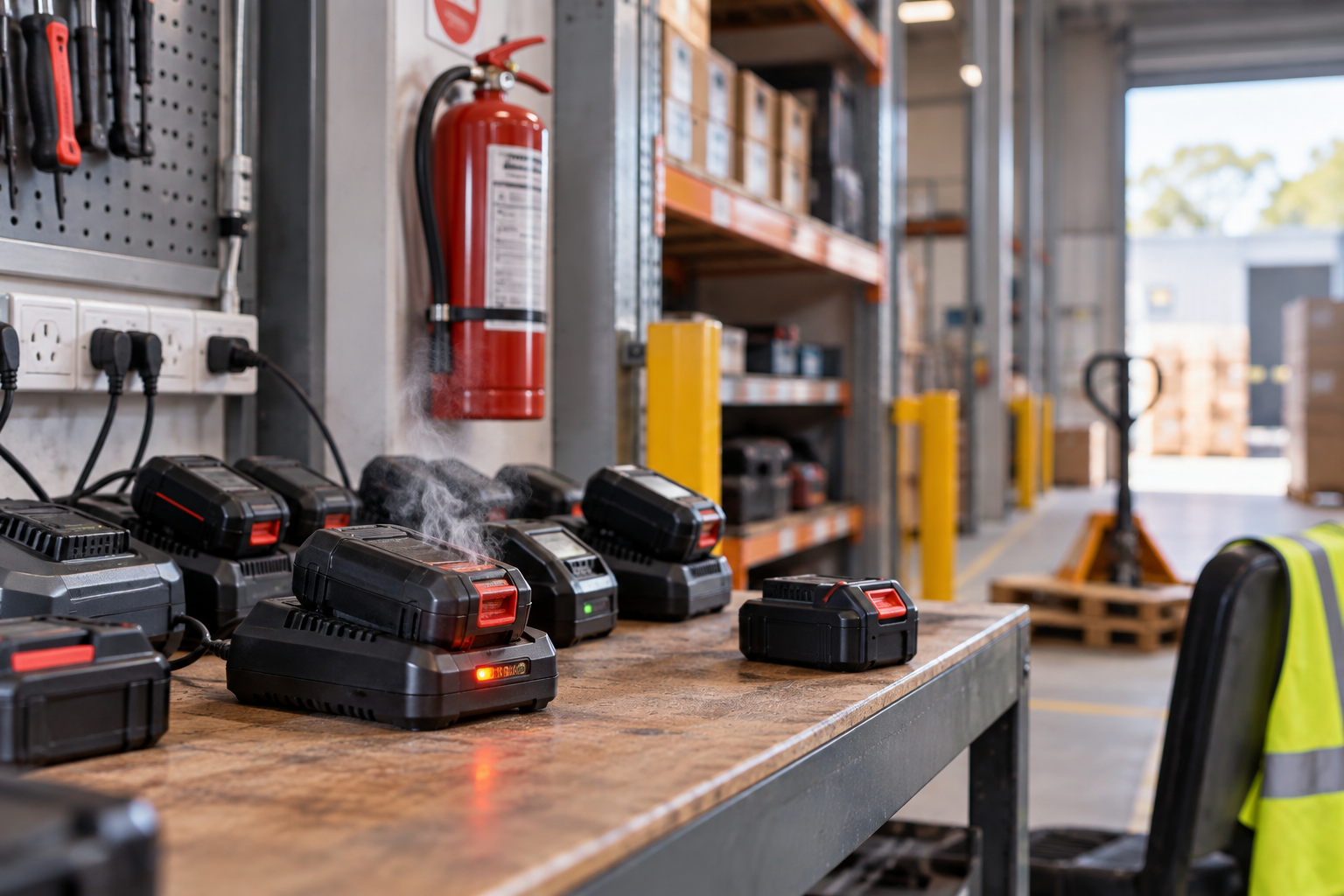
Problems can occur when a battery becomes damaged, overheated, overcharged or develops an internal fault. In some circumstances, this can lead to a process known as thermal runaway, where the battery rapidly generates heat and may ignite.
The risks can be particularly concerning when multiple batteries or devices are stored and charged together.
Think about how many rechargeable devices may now be found in a typical workplace:
- Laptops and tablets
- Mobile phones
- Power banks
- Cordless power tools
- E-bikes and e-scooters
- Cleaning equipment
- Portable scanners and warehouse equipment
- Rechargeable gardening equipment
- Battery-powered machinery
A workplace that had relatively few rechargeable devices five years ago may now have dozens.
Watch for Damaged or Overheating Batteries
Employees should know that a damaged battery isn’t something to ignore.
Warning signs can include a battery becoming unusually hot, swelling or changing shape, leaking, producing an unusual smell or making unexpected noises.
Damaged devices should not simply be placed back on charge.
Businesses should have a procedure for reporting potentially damaged batteries and ensure employees understand what to do if they notice a problem.
Think About Where Equipment Is Being Charged
One of the easiest workplace fire risks to overlook is the charging location.
Over time, charging stations often develop wherever a power point happens to be convenient.
That could mean batteries being charged near cardboard boxes, paperwork, packaging materials or other combustible items.
Charging equipment should be positioned in an appropriate location away from unnecessary combustible materials, and charging areas should be kept tidy.
Businesses with large numbers of rechargeable tools or devices should also consider whether a dedicated charging area is appropriate for their workplace.
Avoid Blocking Fire Equipment and Escape Routes
As battery-powered equipment becomes more common, charging racks, storage cabinets and equipment can gradually take up valuable space.
Make sure new storage and charging areas don’t obstruct access to fire extinguishers, hose reels, fire doors or emergency exits.
Emergency evacuation routes should remain accessible and clearly identifiable.
This is particularly important in warehouses and workshops where stock, equipment and work areas frequently change.
Is Your Fire Equipment Still Appropriate?
Changes in technology can also change the fire risks within a workplace.
The fire protection equipment installed when a building was first occupied may have been selected based on the risks that existed at the time.
If the way your business operates has changed substantially, it can be worthwhile having your fire protection arrangements reviewed.
FCF Fire & Electrical Sydney provides fire extinguisher supply, installation and servicing as well as a broad range of fire protection and compliance services.
Don’t Forget Staff Training
Fire equipment is only one part of workplace fire safety.
Employees should understand the site’s emergency procedures and know how to respond if they discover a fire or another emergency.
They should also know when attempting to fight a fire would be unsafe and evacuation is the appropriate response.
Fire safety training can help employees understand evacuation procedures, emergency responsibilities and the correct use of workplace fire equipment.
This is especially important when new risks or equipment are introduced into a workplace.
Review Your Evacuation Procedures
The introduction of battery charging areas, new equipment or different storage arrangements can change how people move through a workplace.
Take the opportunity to review:
- Emergency exit routes
- Evacuation diagrams
- Assembly areas
- Access to fire equipment
- Emergency and exit lighting
- Staff emergency procedures
Small operational changes can accumulate over time, leaving a workplace very different from when its fire safety arrangements were originally established.
Make Fire Safety Part of Managing New Technology
Rechargeable technology isn’t going away. In fact, Sydney workplaces are likely to become increasingly dependent on battery-powered devices and equipment.
The important thing is to make sure fire safety practices evolve along with the technology being used.
Regularly reviewing charging areas, battery storage, emergency procedures, fire equipment and employee training can help businesses identify potential problems before they become serious.
Fire Protection Services for Sydney Businesses
FCF Fire & Electrical Sydney provides comprehensive fire protection, testing, maintenance and compliance services for commercial, industrial, strata and other properties throughout Sydney.
From fire extinguishers and emergency lighting to fire training, evacuation diagrams, fire detection systems and ongoing maintenance, our team can help ensure your workplace fire protection measures remain appropriate, maintained and compliant.
If your workplace has changed or you’re unsure whether your existing fire protection arrangements are still suitable, contact FCF Fire & Electrical Sydney to arrange an assessment.